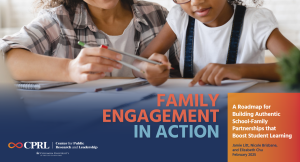
FCSN’s power‑sharing model is a case study in CPRL’s (Center for Public Research and Leadership at Columbia University) Family Engagement in Action roadmap!
Why we’re excited:
Our APPLE project is one of the 10 featured case studies. In the “Background” table the report spotlights Federation for Children with Special Needs as the Massachusetts exemplar, noting our educator‑and‑family capacity building, listening sessions and co‑design work.
A full vignette, “FCSN has a strong coproduction model,” (pp. 21‑23) describes how APPLE teams use progressive stacking, the Leadership Compass, and flexible, participant‑driven agendas to shift power and co‑design district change .
The report also highlights our data‑driven equity checks, tracking who speaks, whose voices are amplified, and adjusting practice in real time .
Lessons we all can apply tomorrow
Shift the microphone. Techniques like progressive stacking intentionally give marginalized voices the floor first, ensuring power imbalances don’t shape decisions.
Measure what matters. Simple observation tools that track speaking turns and quick “Do you feel heard?” surveys surface inequities in real time.
Plan for small wins. APPLE’s teams pick manageable goals (e.g., district translation systems) so families see tangible change fast, sparking momentum for bigger reforms.
Build shared capacity. Workshops and data walks equip both educators and families to analyze evidence and co‑design next steps, reinforcing a culture of continuous improvement.
Our inclusion in this national roadmap reflects the hard work of MASFEC, FCSN staff, and, most importantly, the families and educators who co‑lead APPLE. Let’s celebrate and keep pushing the boundaries of authentic, equitable family engagement!
If you are interested in participating in a future APPLE program, check out this page on the FCSN website: https://fcsn.org/apple/


